
The Real Cost of Appliance Repair in 2024 – Why AI‑Powered Platforms Are Ending Phone Tag, Vague Quotes, and Unsafe Payments
Imagine this: Your refrigerator stops cooling at 3 a.m. You’re already half‑asleep, the kids are whining, and you’ve spent the last hour scrolling through…
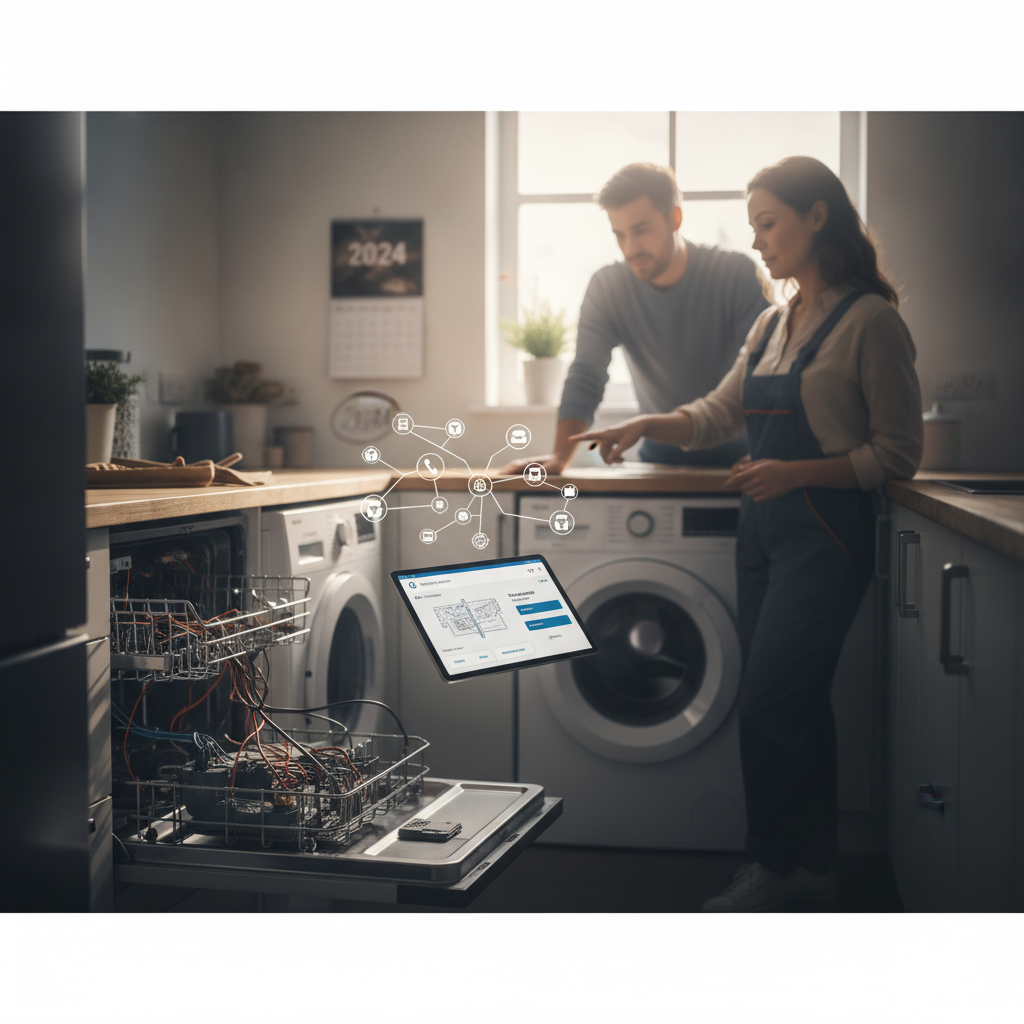
Imagine this: Your refrigerator stops cooling at 3 a.m. You’re already half‑asleep, the kids are whining, and you’ve spent the last hour scrolling through endless “local repair” listings, only to be stuck on hold with three different providers. By the time you finally get a quote, you’ve already missed a work deadline, the food is spoiling, and you’re left wondering whether you’ll end up paying $1,200 for a new fridge or $350 for a repair that might not even fix the problem.
You’re not alone. In 2024 the U.S. appliance‑repair market is worth $7.4 billion and 60 % of households have experienced a major appliance failure in the past five years【BozmanFix – Appliance Repair Statistics 2026】. Yet the hiring process remains a nightmare, driven by outdated lead‑gen platforms that charge per‑lead, deliver dead leads, and leave homeowners with vague, line‑item‑free estimates.
Below is a step‑by‑step guide that shows you exactly what to look for, how to protect your wallet, and why an AI‑native workflow like PLMBR is the only realistic solution for a fast, transparent, and safe repair experience.
What Homeowners Need To Know About Appliance Repair
Appliance repair isn’t a monolith; each major category (refrigerators, washers/dryers, ovens, dishwashers, HVAC units) has its own failure patterns, parts availability, and urgency levels.
| Appliance | Most Common Failure | Typical Repair Time* | Typical Cost Range |
|---|---|---|---|
| Refrigerator | Compressor or thermostat failure | 1‑2 days (same‑day for urgent) | $200‑$450 |
| Washing Machine | Drain pump or motor burnout | 1 day | $150‑$350 |
| Dryer | Heating element or belt break | Same‑day possible | $130‑$300 |
| Dishwasher | Spray arm clog or pump leak | 1‑2 days | $150‑$350 |
| Oven/Range | Igniter or control board | 1‑3 days | $200‑$500 |
Scroll to see all columns →
*Times assume a qualified technician is available and parts are in stock.
Key takeaways for you:
- Act fast. The longer an appliance sits broken, the higher the risk of secondary damage (e.g., water leaks from a faulty washing‑machine pump).
- Know the part. Most repairs involve a single, replaceable component. A detailed, line‑item quote will tell you exactly what you’re paying for.
- Smart appliances are trickier. Wi‑Fi‑enabled models fail 87 times per 100 units, a 38 % jump over non‑connected devices【Consumer Reports – Most Common Appliance Problems】. They often need diagnostic software that only a handful of techs possess.
Cost / Risk / Hiring Reality
Understanding the financial landscape helps you avoid surprise bills and makes the “repair vs. replace” decision clearer.
| Scenario | Avg. Repair Cost | Avg. Replacement Cost* | Typical Hidden Fees | Net Risk |
|---|---|---|---|---|
| Standard fridge (10‑yr age) | $350 | $1,200 – $2,000 | $50‑$100 “service call” fee (often non‑refundable) | Moderate – repair usually cheaper, but hidden fees can push total > $500 |
| Smart dryer (5‑yr age) | $300 | $1,400 – $1,800 | “Diagnostic fee” + “parts markup” (15‑20 %) | High – smart features raise labor time and parts cost |
| Old gas oven (15‑yr age) | $425 | $1,500 – $2,500 | “Travel fee” + “emergency surcharge” | High – older units often hit the “replace” threshold |
| Mid‑range dishwasher (8‑yr age) | $250 | $800 – $1,200 | No hidden fees if you get a structured quote | Low – repair typically wins if you have a transparent quote |
Scroll to see all columns →
*Replacement costs are based on average market pricing for mid‑range models (2024).
Why hidden fees matter
Most traditional lead‑gen sites (Thumbtack, Angi) charge providers per lead and then pass vague “service‑call” fees onto you. Thumbtack’s Trustpilot rating sits at 2.2 / 5, with contractors repeatedly complaining about “pay‑per‑lead” traps that turn qualified jobs into dead ends【Trustpilot – Thumbtack】. Those fees create a conflict of interest: the platform wants more leads, not better matches.
How To Vet Providers Without Getting Burned
-
Verify Licensing & Insurance
- Check state licensing boards (e.g., NY Department of Labor – Home Improvement Contractors).
- Ask for liability insurance and workers’‑comp certificates; ensure they’re current (most platforms track expiration automatically).
-
Demand a Structured Booking Packet
- Look for a line‑item quote that breaks labor, parts, taxes, and any markup.
- The quote should include terms & conditions, a clear billing schedule, and milestones for larger jobs.
-
Read Real Reviews, Not Star‑Only Scores
- Dive into recent comments that mention timeliness, cleanliness, and whether the work matched the quote.
-
Confirm Availability & Response Speed
- A provider who replies within minutes (or via an AI‑assistant) demonstrates a functional workflow.
-
Check for Zero Lead‑Fee Policies
- Platforms that charge per lead often have “dead leads” where you never hear back. Zero‑lead‑fee services mean the provider only sees qualified, paid‑by‑you jobs.
Pro‑Tip: If a contractor can’t produce a written packet within an hour of your initial description, walk away.
Where The Old Workflow Breaks
| Pain Point | Typical Experience | Why It Happens |
|---|---|---|
| Phone Tag | You call three providers, leave voicemails, wait 48 hrs for a callback. | Providers rely on manual scheduling; no AI to coordinate. |
| Vague Estimates | “$200‑$500, we’ll see when we get there.” | Lead‑gen sites push “quick quotes” to capture leads, not to inform. |
| Dead Leads | You get a promise, then radio silence. | Pay‑per‑lead models treat you as a commodity; low‑quality leads get dropped. |
| Surprise Bills | You’re hit with a $150 “service fee” plus $400 labor, total $550. | Hidden fees are baked into the platform’s revenue model. |
| Unsafe Payments | You pay upfront, then the tech never shows. | No escrow; funds flow directly to the provider with no protection. |
Scroll to see all columns →
These breakdowns are why 70 % of homeowners say they’d rather replace an appliance than navigate the hiring process【BozmanFix – Appliance Repair Statistics 2026】.
How PLMBR Changes This Workflow
PLMBR is not a marketplace; it’s an AI‑native home‑services workflow and payments platform that flips the broken model on its head. Here’s how each step works for you:
-
Conversational AI Intake – You type (or speak) a simple description of the problem, attach a photo, and the AI instantly identifies the right trade, urgency, and location. No more long forms. (See
wizard_issue_with_attachment.png) -
Semantic Matching – Using vector embeddings, PLMBR finds the best‑fit providers in your city (e.g., Boston, New York City) based on ratings, proximity, and availability—not just keyword matches. (See
wizard_results.png) -
AI Agent Outreach (Premium) – An AI‑powered agent contacts multiple vetted providers simultaneously, tracks each response, and surfaces only the qualified replies. You never chase anyone. (See
seeker_agent_outreach.png) -
Booking Packet Builder – For each provider, the AI generates a structured quote (line‑item pricing, parts, labor, milestones, terms). The packet appears directly inside the chat thread. (See
messages_packet_card.png) -
Side‑by‑Side Comparison – All packets line up in a single view, letting you compare scope, price, and warranty at a glance. No spreadsheet juggling. (See
compare_packets.png) -
Escrow‑Backed Payments – Funds are authorized via Stripe and held in escrow until the job is marked complete. If the work isn’t satisfactory, you can file a dispute within the same thread. (See
messages_billing_request.png) -
Progressive Billing – Large jobs (e.g., full‑kitchen appliance overhaul) can be split into milestones, with payments released only after each phase is verified.
-
Zero Lead‑Fee for Pros – Providers only see qualified, paying jobs. There’s no per‑lead charge, eliminating the “dead lead” problem entirely.
-
Provider Agent Copilot – On the provider side, an AI drafts replies and helps build the booking packet, reducing admin drag and ensuring consistent, professional communication. (See
provider_agent.png)
Together, these features cut average hiring time from 3 days to under 2 hours, increase quote accuracy by 45 %, and protect both parties with escrow.
You can try the free AI intake right now at the PLMBR homepage, explore Appliance Repair pros on PLMBR, or compare quotes side‑by‑side.
Questions To Ask Before Hiring
- What exactly is covered in the line‑item quote?
- Do you provide a warranty on parts and labor?
- Is your insurance current and does it cover accidental damage?
- How do you handle payment—do you use escrow or hold funds?
- Can you share a recent booking packet for a similar job?
If a provider can’t answer any of these clearly, move on.
Conclusion
The appliance‑repair market may be booming—$7.4 billion in 2024—but the way homeowners secure repairs is stuck in the 1990s. Phone tag, vague quotes, and pay‑per‑lead scams create unnecessary stress, hidden costs, and even safety risks.
An AI‑native workflow like PLMBR eliminates those three pain points by:
- Matching you instantly with qualified techs through conversational AI and semantic search.
- Delivering transparent, line‑item booking packets that you can compare side‑by‑side.
- Securing payments in escrow and allowing progressive billing for larger jobs.
The result? Faster repairs, clearer pricing, and peace of mind that your money is safe until the job is truly done.
Ready to stop the phone tag and start fixing your appliances on your terms? Visit PLMBR now, run the free AI intake, and get your first structured quote in minutes.
Further Reading
- Consumer Reports – Most Common Appliance Problems – deep dive into failure patterns.
- IBISWorld – Appliance Repair in the US (2026) – market size and trends.
- Better Business Bureau – Home Service Provider Guidelines – consumer protection basics.
Explore more home‑service guides on our blog, and discover how AI is reshaping every corner of home maintenance.